Research Library
Original peptide testing data and studies from our community. These reports are educational and are not intended to inform decisions about human use of any product.

Retatrutide: The Complete Stability Picture
Eight extended-duration stability studies on the most-tested compound in our library: durable for months once reconstituted, very stable as a dry powder, with a few sharp exceptions.
We put retatrutide through eight extended-duration stability studies, spanning refrigerator, room temperature, freezer, freeze-thaw, 130 °F heat, and bacteriostatic versus ultrapure water, and put the results in one place to show how it holds up over time and under stress.

How Deep Does the Needle Go?
Needle length, subcutaneous versus intramuscular, and why the same 1-inch needle reaches muscle in one person and stops in fat in another.
Skin is about 2 mm thick in almost everyone. The fat under it is not, and that single fact explains most of what goes wrong with needle length. A 4 mm needle reaches subcutaneous tissue in essentially every adult, while a 1-inch needle aimed at the gluteal muscle frequently stops short of it. Here is what the measurement studies found, and how it applies differently to thin aqueous peptides and thick testosterone oils.

Reading a COA
What a certificate of analysis actually tells you, what it doesn't, who ran the test, and how to read the three numbers that matter, with real reports.
A COA answers three separate questions: is it the right molecule, how intact is the peptide, and how much is actually in the vial. Most people read only purity, and purity means less than they think. We walk through real redacted lab reports, including three different failures, explain first vs second vs third party testing, and show how to verify a report and spot a fake.
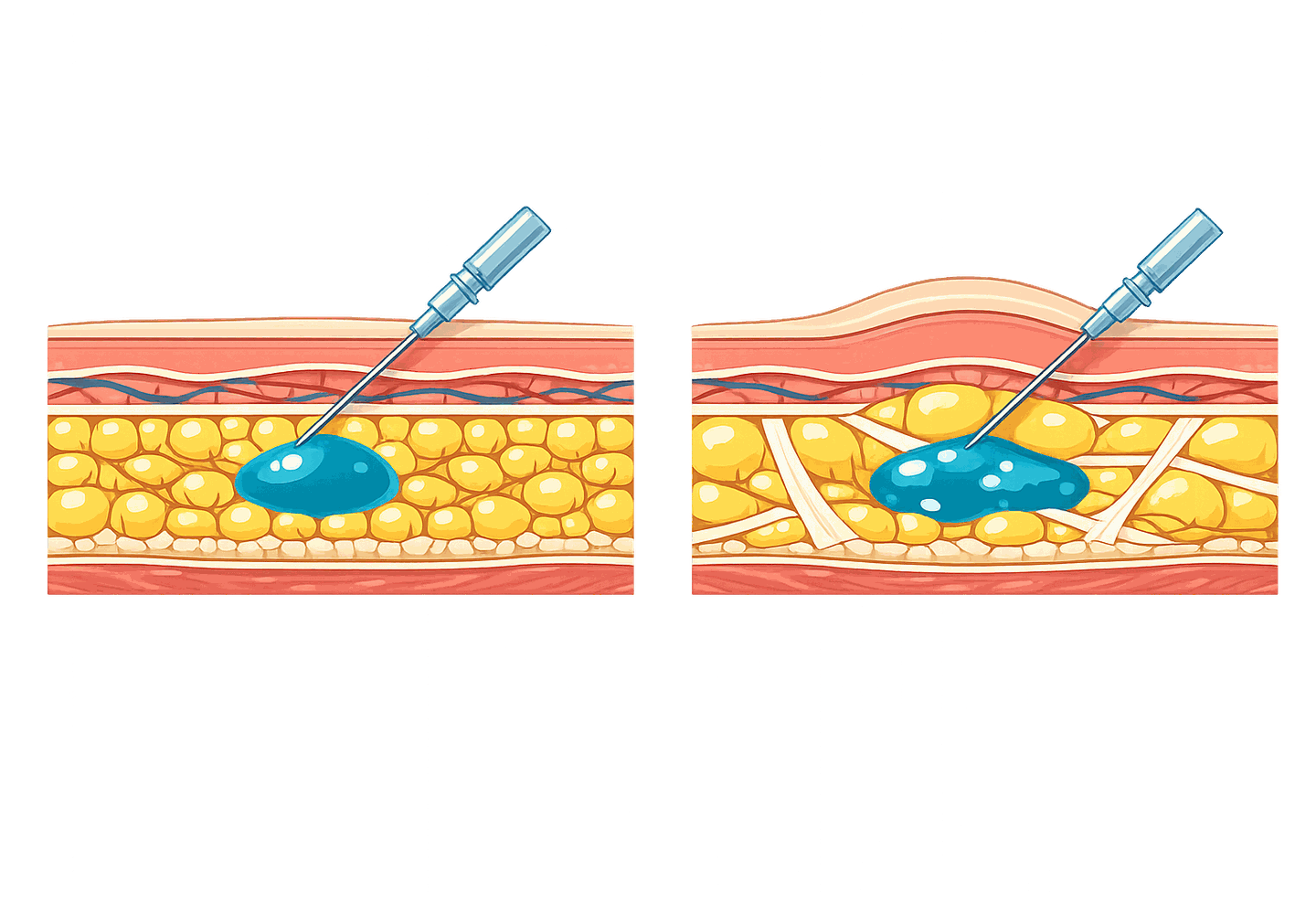
Rotate Your Sites
What lipohypertrophy is, why it quietly wrecks dosing consistency, and what the injection-technique literature actually says about rotating sites.
Repeatedly injecting the same patch of subcutaneous tissue builds lipohypertrophy: firm, poorly-perfused lumps that absorb erratically. The insulin literature is unambiguous that correct site rotation prevents it. Here is the evidence and the technique.
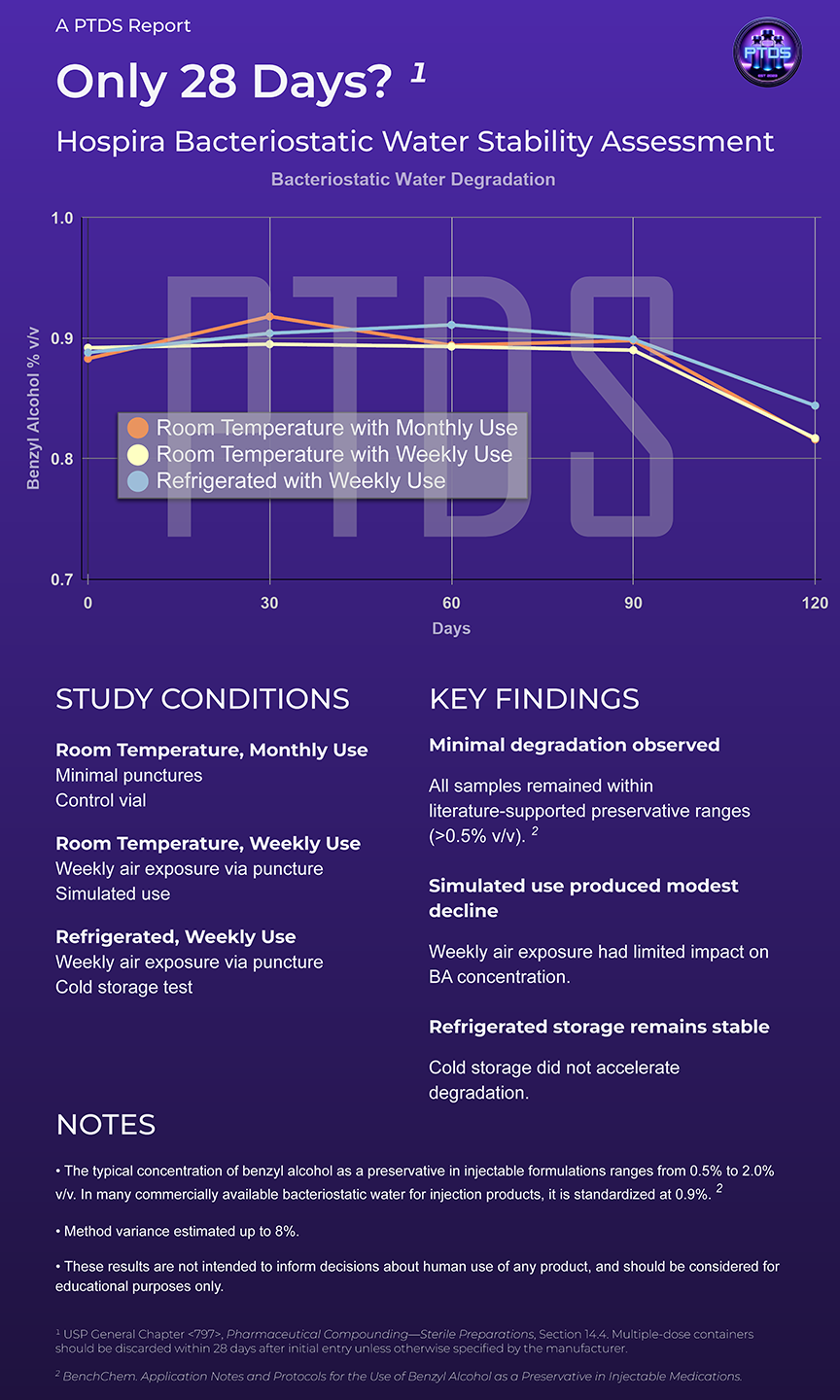
Only 28 Days?
A 120-day stability assessment of Hospira bacteriostatic water under three storage conditions.
USP <797> directs that multi-dose containers be discarded within 28 days of first puncture. We commissioned third-party testing (Janoshik Analytical) of benzyl alcohol concentration in Hospira BAC water at days 0, 30, 60, 90, and 120 across three conditions. All three samples held within the literature-supported preservative range through day 120.